
Living and Studying in Toronto, Canada 2026
This article provides a comprehensive guide to living, studying, and working in Toronto, Canada in 2026. As the capital of Ontario and the economic engine of the country, Toronto offers world-class education at institutions like the University of Toronto, a booming tech and finance job market, and a highly diverse, safe environment.
Drawing on over 10 years of experience helping international students at Yes Study, I will break down everything from the average cost of living (around $2,100 CAD for rent) to navigating the TTC transit system, exploring top colleges, and connecting with the robust local community.
Overview of Toronto: What You Need to Know
Where is Toronto Located?
Toronto is the capital of the province of Ontario, situated in southeastern Canada along the northwestern shore of Lake Ontario. The city is just a few hours’ drive from the US border (New York State), making it a strategic “gateway” connecting Canada to major North American economic hubs like New York City, Chicago, and Boston.
Its geographical location makes travel and trade highly convenient. Toronto Pearson International Airport is one of the busiest in North America, and its dense network of highways and railways makes traveling to other Canadian cities like Ottawa, Montreal, and Vancouver seamless.
Toronto’s Role in Canada’s Economy and Culture
As the most populous city in Canada, Toronto is the nation’s premier economic center. The downtown Financial District is home to major financial institutions, top-tier banks, tech giants, media conglomerates, and real estate headquarters. The Toronto Stock Exchange (TSX) ranks among the largest in North America.
Beyond economics, Toronto is a massive cultural and educational hub. It boasts prestigious universities, colleges, theaters, museums, and year-round festivals. According to demographic data, residents come from over 200 ethnic backgrounds and speak more than 140 languages. In my experience, this incredibly open and multicultural environment makes it incredibly easy for international students to adapt and feel at home.
Why the Nicknames “The Heart of Canada” and “Hogtown”?
You will often hear Toronto referred to as the “Heart of the Maple Leaf Country” due to its central role in Canada’s economy, finance, culture, and education. When you read news about Canada’s GDP, employment rates, or real estate, Toronto is almost always the focal point.
The nickname “Hogtown” carries more historical weight. From the late 19th to the early 20th century, Toronto was home to massive pork processing plants and slaughterhouses that exported meat across North America. Locals humorously dubbed it “Hogtown.” While rarely used in daily conversation today, you might still spot it in historical articles or local heritage stories.
Why is Toronto Highly Livable?
Toronto consistently ranks as one of the most livable cities globally due to several core factors:
- A robust economy with diverse industries, offering vast employment and business opportunities.
- A multicultural population that fosters a welcoming and inclusive environment.
- Top-tier healthcare and world-renowned educational institutions.
- High safety standards, excellent quality of life, and numerous green parks.
- An extensive and well-connected public transit system.
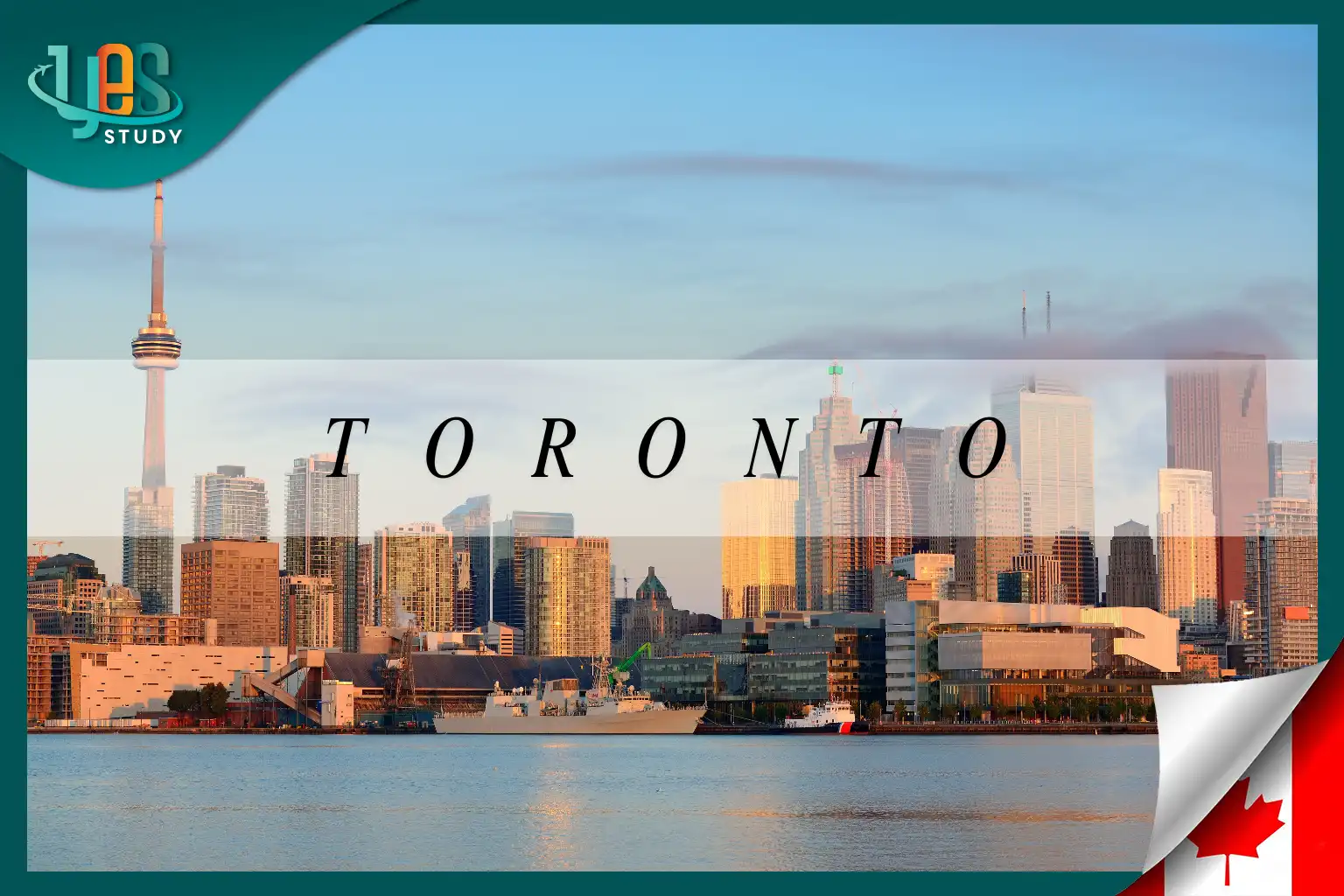
- A vibrant arts scene, dynamic festivals, and a breathtaking skyline right on Lake Ontario.
What is the Weather Like in Toronto?
Toronto experiences a temperate climate with four distinct seasons:
- Spring (March–June): Cool temperatures ranging from 10–15°C, with frequent rain that helps the city’s greenery bloom.
- Summer (June–September): Warm and pleasant, averaging 24–25°C, perfect for outdoor activities and waterfront walks.
- Autumn (September–December): Crisp and cool at 10–12°C, famous for the stunning changing colors of the maple leaves.
- Winter (December–March): Cold and dry with snowfall. Temperatures can drop to -25°C with the wind chill. Advice from our consultants: International students must invest in high-quality, waterproof winter gear upon arrival.
Geography and History of the Megacity
Geography and Landscape
Located on the northwestern shore of Lake Ontario, the city stretches across a relatively flat coastal plain dotted with deep ravines, modern urban developments, and expansive green spaces. Lake Ontario provides a beautiful waterfront for recreation, while large parks like High Park and the Toronto Islands offer natural escapes right in the middle of the metropolis.
History and Development
Toronto’s history stretches back thousands of years before European settlement, serving as a vital living and trading ground for Indigenous communities (such as the Huron-Wendat, Seneca, and Mississaugas). The Toronto Carrying-Place Trail along the Humber River was a crucial trade route.
- 1793: The British established the Town of York, making it the capital of Upper Canada.
- 1812: During the War of 1812, the Battle of York saw US forces capture and burn parts of the settlement.
- 1834: York was officially incorporated and renamed the City of Toronto, with a modest population of just 9,252.
- 1976: The iconic CN Tower was completed, becoming the world’s tallest free-standing structure at the time.
- 1998: The provincial government amalgamated the old city with five surrounding municipalities (North York, Scarborough, Etobicoke, York, and East York) to create the “megacity” we know today.
Demographics and Multiculturalism
Population Density
According to Statistics Canada’s 2021 census, the city proper has a population of approximately 2.79 million, making it the most populous city in Canada and the fourth largest in North America. The Greater Toronto Area (GTA) houses roughly 6.7 million people, while the broader Golden Horseshoe region approaches 9.8 million residents.
A Tapestry of Languages and Cultures
Toronto is arguably the most multicultural city on earth. In the Toronto Census Metropolitan Area (CMA), 46.6% of the population are immigrants. Racialized groups account for about 57% of the CMA’s population, compared to the national average of 26.5%.
While English is the dominant language, over 160 languages are spoken here. Nearly a quarter of residents use a language other than English or French at home (including Mandarin, Cantonese, Tagalog, Spanish, and Italian). The city’s 911 emergency service even supports over 150 languages, ensuring newcomers feel safe and understood.
The Vietnamese Community in Toronto
For our clients from Vietnam, Toronto feels incredibly close to home. According to the 2021 census, around 82,000 people of Vietnamese descent live in the GTA. You will find strong community hubs, authentic restaurants, and cultural support networks, particularly in areas like North York (Jane and Finch). Organizations like the Vietnamese Association of Toronto provide excellent settlement, employment, and family consulting services.
Economy, Jobs, and Cost of Living (2026 Estimates)
Economy and Job Opportunities
Toronto is Canada’s economic powerhouse, driven by:
- Finance & Banking: Over 10,000 financial firms employing 270,000 professionals.
- Tech & AI: The largest tech hub in Canada with 24,000 companies and nearly 290,000 workers.
- Film & Media: A massive destination for film production, game studios, and creative agencies.
Opportunities for Students: Under current IRCC rules, international students can work off-campus for up to 24 hours per week. After graduating, you can apply for a Post-Graduation Work Permit (PGWP) valid for up to 3 years. Important Note: With Canada’s stricter 2025/2026 PGWP policies, choosing an in-demand major (like IT, healthcare, or logistics) is critical to securing your permit and eventually your Permanent Residency (PR).
Estimated Cost of Living
Living in a world-class city comes with a price. Based on current market rates, expect the following monthly expenses:
- Housing: A 1-bedroom apartment averages $2,100–$2,350 CAD. Renting a private room in a shared house or homestay costs between $900–$1,400 CAD.
- Food & Groceries: Around $300–$500 CAD if you cook at home. Eating out costs $15–$30 CAD per meal.
- Transportation: A TTC monthly pass is $156 CAD for adults and $128 CAD for post-secondary students.
Pro Tip: I always advise students to save money by living slightly outside the downtown core but near a subway line, cooking at home, and utilizing their student discounts.
Top Universities and Colleges in Toronto
University of Toronto (UofT)
Founded in 1827, UofT is the undisputed academic star of Canada. It spans three campuses (St. George, Mississauga, and Scarborough) and hosts over 100,000 students. It consistently ranks #1 in Canada and among the top globally. With nearly 30% international students, it is an incredible place to build a global network, particularly if you are pursuing Computer Science, Engineering, Business, or Life Sciences.
York University
The third-largest research university in Canada, York University operates the massive Keele Campus, the bilingual Glendon Campus, and the newly opened Markham Campus (2024). It is globally recognized for the Schulich School of Business and the Lassonde School of Engineering. It offers a slightly more accessible entry rate than UofT while maintaining exceptional academic rigor.
Other Leading Institutions
- Toronto Metropolitan University (TMU): Located right downtown, famous for Business, Media, Journalism, and Engineering.
- OCAD University: The premier choice for art, design, and digital media.
Top Colleges for Fast-Track PR:
If your goal is hands-on learning, a fast entry into the workforce, and a clear path to PR, Toronto’s polytechnic colleges are phenomenal choices. Seneca Polytechnic, Humber College, George Brown College, and Centennial College offer highly respected 2-to-3-year diploma programs with excellent co-op placements in tech, healthcare, hospitality, and business.
Toronto Public Library (TPL)
A hidden gem for international students is the TPL system. With 100 branches, it is the largest public library system in Canada. As a resident or student in Toronto, you get a free library card granting access to books, e-books, online skill courses, free Wi-Fi, and quiet study rooms. It is a lifesaver during final exam seasons.
Navigating Transportation in Toronto
Public Transit (TTC)
The Toronto Transit Commission (TTC) operates the city’s public transport:
- Subway: Line 1 (Yonge-University), Line 2 (Bloor-Danforth), Line 4 (Sheppard), and the upcoming Line 5 (Eglinton LRT).
- Streetcars: Iconic red streetcars running along major downtown routes like King, Queen, and Spadina.
- Buses: A vast network covering areas beyond the subway lines, operating 24/7.
You pay using a PRESTO card, and a single fare gives you a two-hour transfer window across all TTC vehicles.
Airports
- Toronto Pearson International Airport (YYZ): The primary global gateway located in Mississauga. The best way for students to get downtown is the UP Express train, which takes just 25 minutes to Union Station.
- Billy Bishop Toronto City Airport (YTZ): Located on the Toronto Islands just minutes from downtown, perfect for short domestic flights or trips to the US.
Frequently Asked Questions (FAQ)
Is Toronto too expensive for international students?
While Toronto is one of Canada’s most expensive cities, it is entirely manageable with smart budgeting. By sharing an apartment off the main subway lines, cooking meals at home, and working part-time (up to 24 hours per week), international students can comfortably cover their living expenses. Furthermore, the higher wages and abundance of jobs balance out the higher costs.
Is it easy to find a part-time job in Toronto?
Yes. Because of Toronto’s massive retail, hospitality, tech, and service sectors, part-time jobs are highly accessible. Students easily find work in cafes, retail stores, or on-campus roles like research assistants or IT support.
How cold does it actually get in Toronto?
Winters (December to March) are genuinely cold, with temperatures regularly dropping below 0°C and occasionally hitting -20°C to -25°C with the wind chill. However, all indoor spaces and public transit are heavily heated, and the city features an extensive underground walkway system (The PATH) downtown to help you avoid the snow.
Conclusion
Toronto, Canada is the ultimate destination for international students and skilled workers seeking a world-class education, robust career opportunities, and a permanent home. While the fast-paced lifestyle and cost of living require solid preparation, the rewards of living in North America’s most dynamic, multicultural megacity are unmatched.
If you are ready to start your journey to Toronto, our experienced team at Yes Study is here to help you select the right school, apply for your visa, and map out a clear pathway to Permanent Residency. Contact us today!
More:
- How to Immigrate to Canada with Your Family in 2026: Comprehensive Guide
- How to File Taxes in Canada 2026: Deadlines, Required Documents and Step-by-Step Guide

Latest news
Living and Studying in Toronto, Canada 2026

How to Get Canadian Citizenship in 2026

Applying for a Canadian Tourist Visa in 2026

How to Immigrate to Canada with Your Family in 2026: Comprehensive Guide

How to File Taxes in Canada 2026: Deadlines, Required Documents and Step-by-Step Guide
