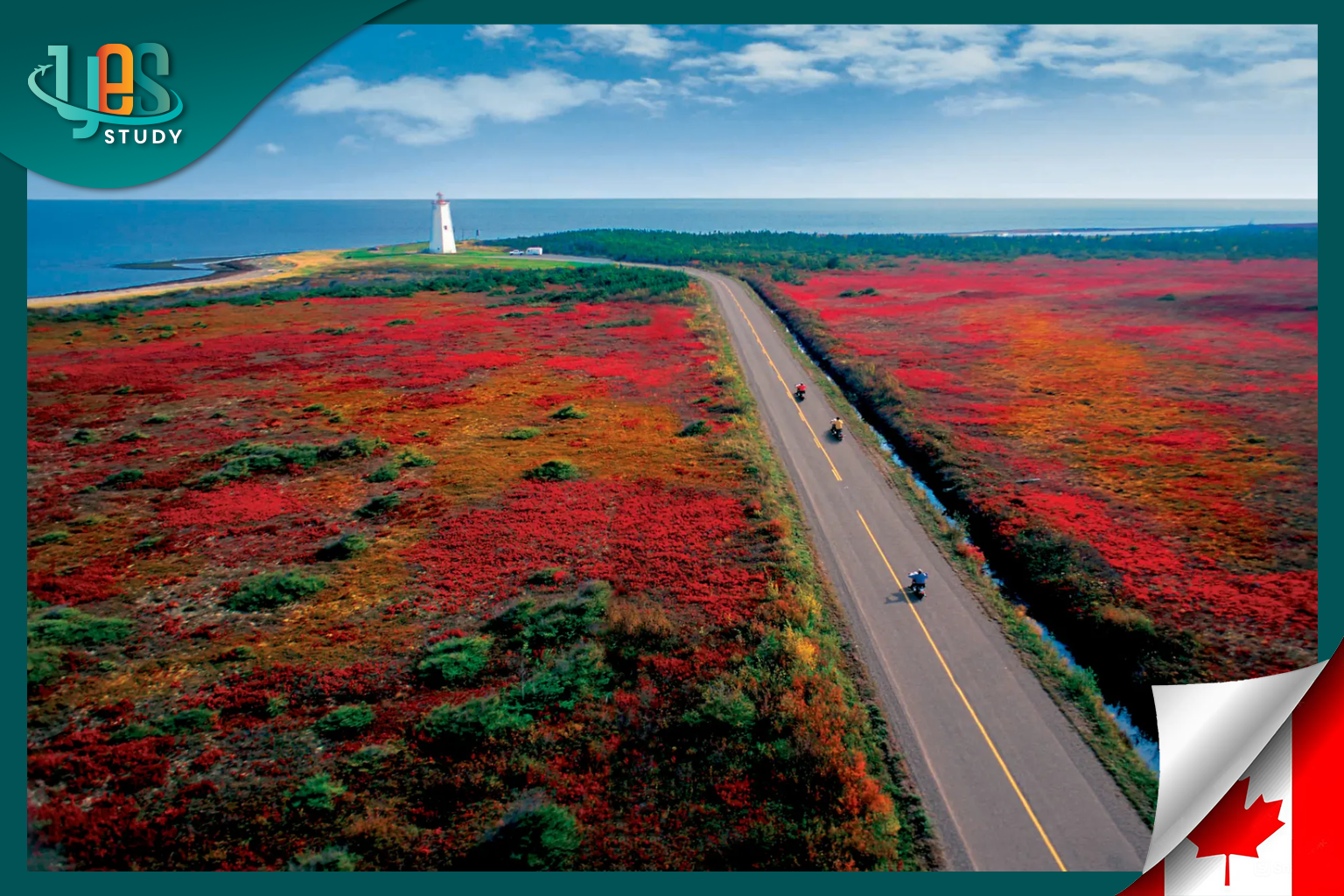
Canada in 2026: Costs, Lifestyle, Immigration, and Study Abroad Pathways
Are you researching Canada to prepare for studying, working, or immigrating in 2026? As the world’s second-largest country located in North America, Canada has long been renowned for its world-class education system, exceptional public healthcare, and open, human-centric immigration policies.
Amid global uncertainties, 2026 continues to position Canada as a top destination for international newcomers due to its welcoming multicultural environment and dynamic labor market. Spanning 10 provinces and 3 territories bordered by three oceans, the “Great White North” opens sustainable pathways for anyone ready to challenge themselves. Guided by Yes Study—a consulting firm headquartered in Toronto—let us explore a comprehensive, realistic, and up-to-date portrait of this beautiful nation.
Introduction to Canada
Canada boasts one of the highest qualities of life globally, driven by advanced education, a robust economy, and a secure environment. Below is a quick statistical snapshot before diving deeper into study, work, or settlement opportunities.
| Indicator | Data / Overview |
|---|---|
| Total Area | 9,984,670 km² |
| Population (2025/2026 est.) | ~39.1 million |
| Capital City | Ottawa |
| Major Cities | Toronto, Montréal, Vancouver, Calgary, Edmonton |
| Official Languages | English and French |
| Currency | Canadian Dollar (CAD) |
Name Origin and Significance
The name “Canada” originates from the St. Lawrence Iroquoian word *kanata*, meaning “village” or “settlement.” By the 16th century, European explorers used “Canada” to refer to the region surrounding present-day Quebec City, eventually expanding it to encompass all British and French territories in North America. Today, the name symbolizes cultural diversity and a rich historical legacy.
Geography and Climate
Geographic Footprint and Administrative Divisions
Occupying the northern half of North America, Canada covers nearly 10 million km², making it the second-largest nation by total area. According to Statistics Canada, it possesses the longest coastline in the world, stretching 243,042 km across three oceans.
The country is divided into 10 Provinces (Ontario, British Columbia, Quebec, Alberta, Saskatchewan, Manitoba, Nova Scotia, New Brunswick, Prince Edward Island, and Newfoundland and Labrador) and 3 Territories (Northwest Territories, Nunavut, and Yukon). Provinces enjoy high legislative autonomy over education, healthcare, and municipal governance.
Climate: More Than Just Ice and Snow
A common misconception is that Canada remains frozen year-round. In reality, its vast latitudinal span creates diverse regional climates:
West Coast (British Columbia / Vancouver):
- Mild maritime climate with warm summers and winters rarely dropping below freezing.
Interior and Eastern Provinces (Ontario, Quebec, Alberta):
- Distinct four-season climates. Summers are warm and sunny (20°C to 30°C), autumns feature vibrant foliage, and winters bring snow accompanied by modern indoor heating and transit infrastructure.
Political System and Economy
Canada operates as a Constitutional Monarchy and a Parliamentary Democracy. King Charles III serves as Head of State, represented by the Governor General, while executive authority rests with the Prime Minister and federal cabinet.
Economically, Canada ranks among the world’s most stable G7 economies, balancing rich natural resources (energy, minerals, forestry, agriculture) with advanced high-tech industries, aerospace, finance, and healthcare. For international workers and immigrants, robust sectors in tech (STEM), engineering, and healthcare offer strong employment prospects.
Education System in Canada
Managed at the provincial level, Canada’s education system maintains high public funding and uniform quality standards. Permanent residents and citizens enjoy free public schooling from grades 1 through 12.
Post-secondary education divides into two main pillars:
- Universities: Focus on academic research and theoretical grounding. Several Canadian institutions (such as the University of Toronto, McGill University, and UBC) consistently rank among the world’s top 50.
- Colleges: Focus heavily on practical, career-oriented vocational training tailored directly to local employer needs, with programs typically lasting 1 to 3 years.
All eligible institutions must hold Designated Learning Institution (DLI) status to enroll international students.
Post-Graduation Work Permits (PGWP) and Settlement Pathways
The Post-Graduation Work Permit (PGWP) program allows international graduates from eligible DLI programs lasting 8 months or longer to work legally in Canada for up to 3 years.
Canadian work experience gained through the PGWP serves as a primary stepping stone to permanent residency via Express Entry (Canadian Experience Class) or Provincial Nominee Programs (PNP).
Healthcare and Social Safety Nets
Canada’s public healthcare system (Medicare) provides free medically necessary hospital and physician services to permanent residents and citizens through provincial health insurance cards (e.g., OHIP in Ontario, MSP in BC).
Additionally, established Vietnamese communities numbering over 300,000 residents across Toronto, Vancouver, and Montreal provide robust cultural networks that help newcomers transition smoothly.
Conclusion
Beautiful, humane, and brimming with professional opportunities, Canada welcomes ambitious individuals seeking global education or permanent residency. Whether you aim to earn an international degree or build a sustainable future for your family, Canada remains an exceptional destination.
With our headquarters located directly in Toronto, Canada, Yes Study stands ready to walk beside you from initial file preparation in Vietnam to touchdown, housing support, and long-term settlement planning. Contact our team today!

Related news
A Guide to Flying to Canada for newcomers (First-Timers)

How to Transfer Money from Vietnam to Canada: 4 Safe and Legal Methods

What time is it in Canada now? Time zone in Canada compared to Vietnam
Latest news

The journey of studying abroad in Canada from Grade 11

Studying in Canada from Grade 12: Is it a good idea, and what is the detailed roadmap?
Studying in Canada: Is It True That Parents Can Obtain a 10-Year Visa? Requirements for Visa Application

Sponsoring Parents and Grandparents to Canada in 2026: A Detailed Guide to the PGP and Super Visa
Guide to Renewing a Canadian Work Permit in 2026: Requirements, Process, and Important Considerations