
Canada Skilled Worker Immigration 2026: Requirements, Costs, and the Fastest PR Roadmap
Skilled Worker immigration is the most direct and popular pathway to obtaining a Permanent Resident (PR) card in Canada for international workers with the skills, experience, and language proficiency that match the country’s economic needs.
As Immigration, Refugees and Citizenship Canada (IRCC) reshapes its policies for 2026, opportunities are expanding for essential sectors such as Healthcare, STEM, Skilled Trades, and Transport. At Yes Study (headquartered in Toronto, Canada), we continuously update the latest immigration law changes to help you build a safe, cost-optimized settlement roadmap with a high success rate.
What is Canada Skilled Worker Immigration?
This program attracts international workers with high levels of education, professional work experience, and strong language skills to live and work long-term in Canada. Once an application is approved, the candidate and their family (spouse and children under 22) are granted a Permanent Resident (PR) card, enjoying most of the same rights as Canadian citizens, except for the right to vote.
The TEER System: A Modern Framework
To accurately assess and classify candidate qualifications, the Canadian government uses the TEER (Training, Education, Experience, and Responsibilities) system, which replaced the old NOC system. The TEER system divides jobs into six categories (0 to 5):
- TEER 0: Senior management roles (e.g., Financial Managers, Marketing Directors).
- TEER 1: Professional roles requiring a university degree (e.g., Software Engineers, Doctors).
- TEER 2: Technical jobs and skilled trades requiring at least 2 years of college or apprenticeship (e.g., Computer Network Technicians, Electricians).
- TEER 3: Technical and craft trades requiring less than 2 years of college or equivalent practical experience (e.g., Plumbers, Bakers).
- TEER 4 & 5: Intermediate or labor-focused jobs (e.g., Service Staff, Cashiers).
To qualify for federal or major provincial Skilled Worker programs, your work experience must typically fall under TEER 0, 1, 2, or 3.
Top 4 Skilled Worker Immigration Programs in 2026
While Canada offers over 80 immigration programs, four major pillars dominate the Skilled Worker landscape.
1. Express Entry (EE) System
Express Entry is Canada’s core online management system, known for its speed and fair competition based on the Comprehensive Ranking System (CRS). It manages three key programs:
- Federal Skilled Worker Program (FSWP): For high-skilled workers with experience outside Canada.
- Canadian Experience Class (CEC): For those with at least 1 year of professional experience within Canada (ideal for international students on a PGWP).
- Federal Skilled Trades Program (FSTP): For technical trades with a valid job offer or certification.
2. Provincial Nominee Program (PNP)
Most provinces (except Quebec) have their own programs to address local labor shortages. A provincial nomination adds 600 points to your Express Entry profile, virtually guaranteeing an invitation for PR.
- OINP (Ontario): Focuses on Tech, Healthcare, and Master’s/PhD graduates in Toronto.
- BCPNP (British Columbia): Famous for its Tech draws for those in Vancouver.
- SINP (Saskatchewan): Offers streams that do not require a job offer for specific in-demand occupations.
3. Atlantic Immigration Program (AIP)
AIP targets Nova Scotia, New Brunswick, Prince Edward Island, and Newfoundland and Labrador. It features lower language and education requirements but requires a valid Job Offer from a designated employer in the region.
4. Rural and Northern Immigration Pilot (RNIP)
These programs encourage workers to settle in smaller communities or rural areas. They often have lower competition and provide high priority to candidates committed to living in these local regions.
Detailed Comparison of Skilled Worker Programs
| Criteria | Express Entry (EE) | PNP | AIP (Atlantic) |
|---|---|---|---|
| Best For | High-skilled, young, strong English. | Meeting specific provincial needs. | Applicants with a job offer in the East. |
| Job Offer Required? | Not mandatory (adds points). | Depends on the stream. | Mandatory. |
| Processing Time | 6 – 8 months (Fastest). | 12 – 18 months. | 6 – 12 months. |
Core Eligibility Requirements for 2026
To be a competitive candidate, you must meet several foundation criteria. In our experience, failing to verify even one of these can lead to a refusal.
1. Age and Education
The maximum points for age are awarded to those between 20 and 29. From age 30, points begin to decrease annually. However, this can be offset by a high level of education (Master’s or PhD). All non-Canadian degrees must undergo an Educational Credential Assessment (ECA) from organizations like WES to be recognized.
2. Language Proficiency
Canada evaluates your language ability through CLB (Canadian Language Benchmarks). You can take IELTS General Training, PTE Core, or CELPIP General. For the Federal Skilled Worker program, a minimum of CLB 7 (IELTS 6.0 in all skills) is required. In my years of consulting, I’ve seen that reaching CLB 9 (IELTS 8.0 Listening, 7.0 others) is often the “tipping point” that secures an invitation.
3. Work Experience
Your experience must be continuous, paid, and fall within TEER 0, 1, 2, or 3. You need at least 1 year of full-time work (1,560 hours) within the last 10 years to be eligible for most streams.
Category-Based Selection: The Golden Opportunity
Starting in 2023 and continuing through 2026, IRCC uses “Category-based selection” to invite candidates from specific sectors, often with lower CRS scores than general draws. These categories include:
- Healthcare
- STEM (Science, Tech, Engineering, Math)
- Skilled Trades
- Transport
- Agriculture and Agri-food
- French-language proficiency
Estimated Costs for Skilled Worker Immigration
Financial preparation is vital. Here is a breakdown of the official government fees as per the latest updates on Canada.ca:
| Category | Cost (CAD) | Notes |
|---|---|---|
| IRCC Application Fee | $950 per adult | $260 per child. |
| Right of PR Fee (RPRF) | $575 per adult | Paid before PR is issued. |
| ECA (WES) Evaluation | $240 – $300 | Excludes document shipping. |
| Medical & Background | $250 – $500 | Estimated per family member. |
*Note: Candidates must also prove “Settlement Funds” (approx. $14,690 for a single person) unless they have a valid job offer in Canada.
The 6-Step Roadmap to Your PR Card
- Step 1: Profile Assessment: Determine your CRS score and choose the right program.
- Step 2: Documentation: Complete your ECA and achieve your target language score.
- Step 3: Enter the Pool: Create your online Express Entry profile.
- Step 4: Receive ITA: Get your Invitation to Apply during a draw. You have 60 days to submit your full file.
- Step 5: Official Submission: Pay fees, complete medicals, and provide police certificates.
- Step 6: Landing: Receive your Confirmation of Permanent Residence (COPR) and move to Canada.
Expert Tips: Avoiding Common Errors
Throughout our 10+ years at Yes Study, we have identified recurring mistakes that derail applications:
- Mismatched TEER Codes: Many candidates choose a code based only on their job title. You must match at least 70% of the “Main Duties” listed by IRCC.
- Incomplete Reference Letters: These must be on official letterhead, signed, and include salary, hours per week, and detailed duties.
- Unexplained Proof of Funds: Large, sudden deposits into your bank account without a clear source of funds can lead to a refusal for Misrepresentation.
Why Choose Yes Study for Your Skilled Worker Journey?
The policy shift for 2025-2026 clearly shows Canada is moving away from temporary residents and prioritizing direct PR for skilled talent. Many of our clients in Toronto have successfully transitioned to PR by leveraging Provincial Nominee Programs (PNP) when federal scores were too high.
Understanding the local labor market and having an expert in your corner is the key to a successful move. We provide a free CRS assessment and build a personalized roadmap for your entire family.
The door to Canada is open for those with a serious plan. Let’s start yours today.

Related news
What languages are spoken in Canada? Official languages and the 2026 immigration strategy
Applying for a 10-year Canadian visa: Requirements, procedures, and application tips
Immigration, Refugees and Citizenship Canada (IRCC)

Studying in Vancouver, Canada: An A-Z Guide for International Students
Trent University (Canada): Detailed Information and Study Abroad Experiences
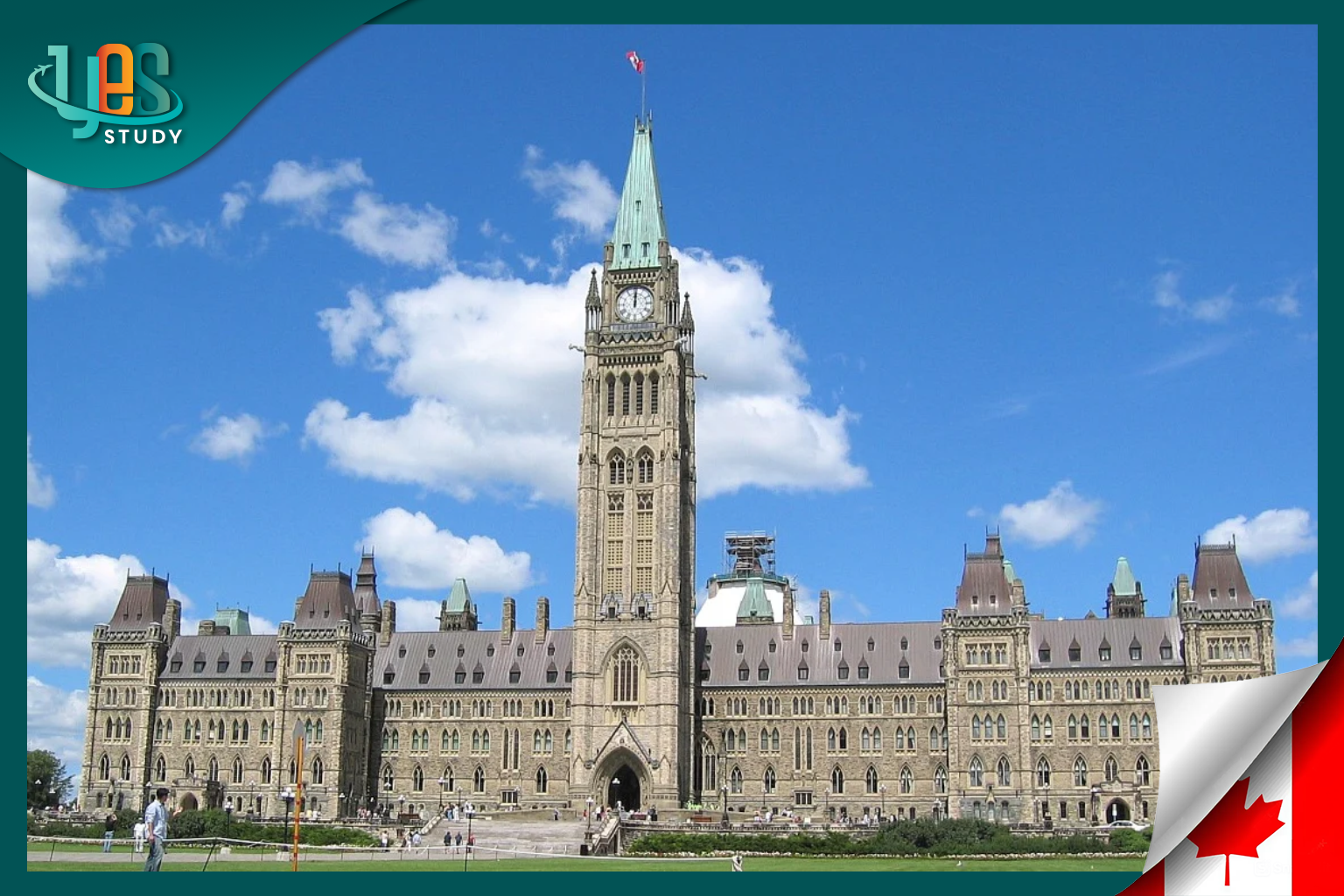
What is the capital of Canada?
Latest news
What languages are spoken in Canada? Official languages and the 2026 immigration strategy
Applying for a 10-year Canadian visa: Requirements, procedures, and application tips
Immigration, Refugees and Citizenship Canada (IRCC)
Studying in Vancouver, Canada: An A-Z Guide for International Students
Trent University (Canada): Detailed Information and Study Abroad Experiences